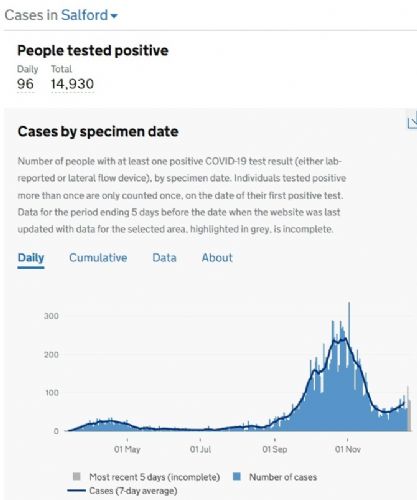
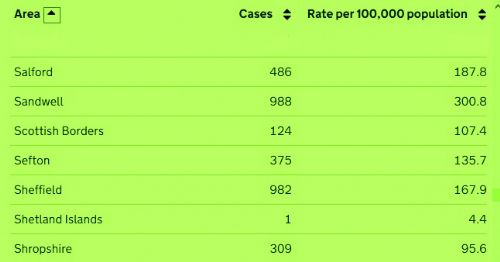
Salford has 96 new coronavirus cases, up from the previous day's 106, bringing the cumulative total to 14,930. The seven day average of cases has increased to 486, up from 474, while the seven day rate per 100,000 population now stands at 187.8, up from 183.1.
Elsewhere in Greater Manchester, the seven day average of cases in Bury is 399, with a seven day rate per 100,000 population of 208.9, up from 207.3; Bolton 449, with a rate of 156.1 (down from 175.5); Manchester 1,082, with a rate of 195.7 (up from 186.8); Oldham 482, with a rate of 203.3 (down from 208.8); Rochdale 457, with a rate of 205.5 (down from 205.9); Stockport 456, with a rate of 155.4 (up from 136); Tameside 316, with a rate of 139.5 (up from 133.3); Trafford 430, with a rate of 181.2 (up from 173.2) and Wigan 504, with a rate of 153.3 (down from 155.2).
There has been one new death at Salford Royal Hospital.
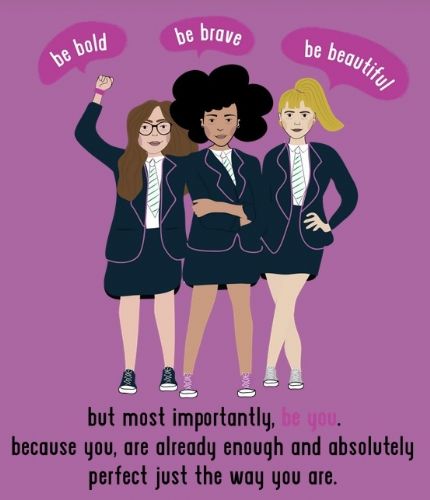
Meanwhile, North West charity, Girls Out Loud, is focusing on the pandemic's impact on teenage girls who have had it really tough over the last nine months, with lockdowns, restrictions on visiting friends, school closures and limitations on social gatherings.
North West police are experiencing a 75% increase in reports of child abuse, the number of abusive images online has tripled and 41% of young people with a mental illness say that COVID-19 related issues have made their condition worse.
This is on top of existing problems, with data from the NHS revealing that in the past ten years there's been a 54% increase in anti-depressant prescriptions for under 18s, and that 1 in 4 girls will self-harm before they leave secondary school, with a 68% rise in hospital admissions for self-harm.
"In the ten years I have been working with teenage girls their world has got a whole lot worse" says Jane Kenyon, founder of Girls Out Loud "This has been a depressing decade for mental health, sexual exploitation and harassment, eating disorders, grooming, bullying and relational aggression, the Insta selfie, the surge of reality TV, date rape and consent issues, fixation on appearance over ability and the growth in consumerism.
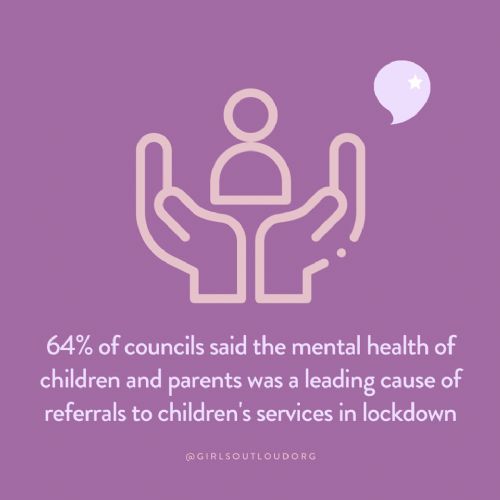
"The current pandemic has undoubtedly impacted the mental health and wellbeing of the next generation" she adds "With parents working from home and experiencing higher levels of stress and possibly financial worries, some of the UK's most vulnerable girls are bearing the brunt of such stresses. Many young girls have lost their support networks and are unable to see friends, adding to feelings of loneliness, hopelessness and isolation.
"Feminism has taken a serious hit as girls struggle to find their voice and their place, many having a full-on identity crisis before they leave secondary school" she explains "We have some work to do to support and inspire them."
Girls Out Loud states that there is a 'growing mental health epidemic amongst 12 to16 year-olds', and is creating and delivering early intervention programmes including Sister Act, an apprenticeship programme with input from local employers, Big Sister Mentoring, which introduces young girls to inspiring women, and the Stardom Programme which works with up to twenty 'at risk' girls over the course of a year.
"It is vital that the community comes together to fight for the futures of young girls across the region" states the charity.
For more details about Girls Out Loud for both girls wanting help and for others who want to donate or aid the charity see the website – click here
Twitter @girlsoutloudorg
Instagram girlsoutloudorg


.jpg)


.jpg)


.jpg)
.jpg)
(3).jpeg)
.png)
(1).JPG)
