I am pretty sure that many of you will have washed with Cussons Imperial Leather soap and wondered about the name, and also why it was difficult to roll around your hands. This is a story right from the heart of the Moor...
The Cussons had their family house on the Moor, called Oaklands House which gave its name to Oaklands Road, that runs from Moor Lane down to Littleton Road. This was in mid Victorian times and it was a large impressive building at the end of Vine Street, with its back door into the current Oaklands Road.
This area is now occupied by Degas Close and Tuscany View, although I always thought these were not appropriate names; surely better names could have been chosen.
One approached the house through big iron gates and landscaped gardens, with big greenhouses containing many orchids. Sadly in 1941 a bomb fell on the garden, doing a great deal of damage and may be responsible for the spread of the Indian or Himalayan balsam all along the Irwell.
The family factory, which originated as a chemists and drysalters, was situated at the bottom of Moor Lane, on Kersal Vale Road, spreading from across the Salford border into Bury. It was noted to be a very successful factory which cared for its employees, and Mrs Marjorie Cussons was known to regularly drink tea with the employees.
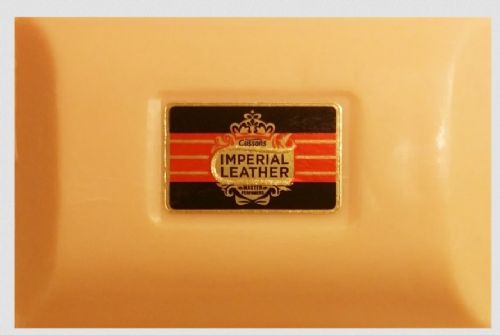
Meanwhile, Imperial Leather soap was known for its creamy lather and long lasting fragrance. We all remember its little label which stops it from going slimey, as it doubles as a soap stand.
The original fragrance dates back to 1768 when a Russian nobleman called Count Orlof commissioned a brand of perfume from Bayleys of Bond Street in London. The perfume was called Eau de Cologne Imperiale Russe, and was said to have whiffed of the smell of leathers worn by Russian royalty.
Cussons had bought Bayleys of Bond Street and Imperial Leather soap was manufactured in 1917 at the Kersal Vale factory, initially called Russian Leather but soon renamed as Imperial Leather. Legend has it that its creation was the result of a sales order for the Russian Court just before the Tsar and family were executed, and that the shape resembled saddle soap.
The Cussons family moved from Oaklands House in 1948 and the house was bought by Salford Electrical Instruments, a subsidiary of General Electric, as a training centre for apprentices. David Fitzroy, from Prestwich, was one of the apprentices and recalls the grandeur of the house which was refurnished by Kendal Milnes. He particularly remembers the large billiard table left in the basement by the Cussons.
The factory itself was visited by Prince Philip in 1963, and then part of the factory was moved to the new industrial area created at the old Agecroft mining site. In 2010 the factory was demolished but its reputation and products, especially Imperial Leather, are still known worldwide today.*
This year, a new £20million housing development has begun to be erected on the site by Great Places Housing Group consisting of 109 houses, 65 of which are for market sale through Cube Homes, 26 through Shared Ownership and 18 being let at affordable rents. There is also one huge wall separating the houses from Moor Lane itself...
While the original Oaklands House and factory have now gone, you can visit the grave of Alexander Tom Cussons and his wife Emily Jane at the entrance to the yard at St Paul's Church on Moor Lane.
* For lots of photos of the demolition of the factory see previous Salford Star article – click here
Words by Alice Searle.
See previous episodes of the Kersal Moor history...
Why Is The Moor Not A Moor? - click here
Suicide and Ghosts - click here
200 Years of Horse Racing on Kersal Moor - click here
The Chartists and Kersal Moor – click here


.jpeg)
.jpg)
.jpg)
.png)
.JPG)
.JPG)
.JPG)
.JPG)
.JPG)
.jpg)
.JPG)
.jpg)
.jpg)
.jpg)
.jpg)



.jpg)


.jpg)
.jpg)
(3).jpeg)
.png)
(1).JPG)
